Top Sightseeing Spots in Oslo: Must-See Attractions for Every Traveler
Best of Oslo: Iconic Landmarks, Must-See-Attractions, and Insider Tips for an Unforgettable Trip
Oslo is my hometown, and I lived here until I was 19 before venturing abroad for 20 years for education and work. I returned in 2020 and spent weeks strolling through the entire city, rediscovering familiar neighborhoods and exploring new developments. I revisited landmarks and museums I once saw as a schoolchild but had since forgotten. Now, I am excited to offer you a comprehensive guide to the vibrant city of Oslo.

If you’re visiting Oslo for the first time, embrace the tourist experience. Don’t be swayed by suggestions to skip the popular landmarks in favor of lesser-known spots. For those who’ve been to Oslo before, keep reading for more recommendations at the end.

Discover Oslo’s Sights on Google Map
HOT TIP: OSLO CITY PASS CARD / TAXIS
The Oslo Pass gives you access to over 30 museums and attractions, discounts at top restaurants, and unlimited public transport in Oslo’s city center — all for a fantastic price. (Note: I’m not sponsored by them; I’ve just been genuinely impressed by the value it offers, unmatched by similar passes in other cities I’ve visited .) I’ve marked sights with an asterisk (*) where the Oslo Pass is applicable. For all public transportation tickets and schedules, you can use the ENTUR website/app.
Taxi companies in Norway are not regulated, but if you need one, Oslo Taxi is the most affordable option. If you’re hailing a taxi from a stand, remember that you have the right to choose the company you prefer, not just the first taxi in line. Be cautious, as other companies often charge significantly more. Oslo Taxi also offers an app called TaxiFix, which allows you to enter your pick-up and drop-off locations to get a price estimate. We do have Uber and Bolt, but Bolt is the cheaper option.
Iconic Attractions: The Royal Palace, Vigeland Park, Oslo Opera House, Akershus Fortress
Cultural Highlights: The National Gallery, Munch Museum, Fram Museum, Norwegian Museum of Cultural History, Kistefos
Unique Experiences: Ekeberg Sculpture Park, Hike Vettakollen, Deichman Bjørvika, Fjord Sauna, Rose Castle

Vigeland Park (Vigelandsparken)
Vigeland Park, locally known as “Frognerparken,” is Oslo’s largest park and a remarkable open-air sculpture park. It features over 200 sculptures by Gustav Vigeland, that beautifully depict various aspects of human life. The park boasts Oslo’s largest rose collection (14,000), and includes a restaurant and café. You can also use a public outdoor pool, tennis courts, a playground, and an ice skating rink in the winter. The park is easily accessible, just a short walk from Majorstua subway station.
– Insider tip: Don’t miss the main bridge’s famous sculpture, “Sinnataggen,” which captures a toddler during a temper tantrum. This beloved piece has endured several acts of vandalism, having been painted and even stolen for 11 days in 1992 before being recovered. Adjacent to the park, you’ll find the Vigeland Museum*, dedicated to the artist and showcasing more of his work.

The Royal Palace (Det Kongelige Slott)
While Norway’s Royal Palace may not be the grandest in Europe, it has its own unique charm. The palace is surrounded by a delightful public park and serves as the official residence of the Norwegian King and Queen. On Constitution Day (May 17th), you can watch parades pass by the balcony where the Royal Family waves to the crowds. Every day at 1:30 p.m., you can witness the changing of the guards, and from end of June to end of August, guided tours are available. The palace is just a few minutes’ walk from the Nationaltheatret subway station.
– Insider tip: The Queen has a private park open to the public from mid-May through September.

Oslo Opera House (Operahuset)
Oslo Opera House is one of the most iconic and visually striking buildings in the city, known for its award-winning modern architecture resembling an iceberg emerging from the fjord. Completed in 2008, it allows you to walk on the roof for stunning panoramic views of Oslo and the fjord. While it’s a renowned venue for opera and ballet performances, I suggest you step inside to admire the breathtaking interior of the lobby. Located just minutes on foot from Jernbanetorget subway station, it’s easily accessible.
– Insider tip: Bring sunglasses, as the sun’s reflection off the white marble tiles on the roof can be harsh on the eyes, even on a cloudy day.

Akershus Fortress (Akershus Festning)
Akershus Fortress* is a medieval castle dating back to the late 1290s. It offers breathtaking views of the Oslofjord and features historical exhibits such as the Armed Forces Museum* (Forsvarsmuseet) and the Resistance Museum* (Norges Hjemmefrontmuseum), as well as guided tours of the grounds. The fortress is a popular venue for weddings (for those with a direct link to the Armed Forces), seasonal markets, concerts, and public holiday celebrations. The closest subway stations are Jernbanetorget and Nationaltheatret.

Museum of the Viking Age (Vikingtidsmuseet)
Museum of the Viking Age*, formerly known as The Viking Ship Museum, houses the world’s best-preserved Viking ships and over 5,500 artifacts from Viking tombs around the Oslo Fjord. Currently closed for a complete renovation, the museum is set to reopen in 2027. The new facility will be three times the size of the original.
– Insider tip: The Fram Museum, Kon-Tiki Museum, and Norwegian Museum of Cultural History are all located on the same peninsula, called Bygdøy, which can be reached by buss or ferry from Aker Brygge.

The National Museum (Nasjonalmuseet)
The National Museum* which reopened in 2022, is home to Norway’s largest public collection of paintings, drawings, and sculptures, including Edvard Munch’s iconic “The Scream.” With a permanent collection of 6,500 works, you’ll find masterpieces by notable Norwegian artists like J.C. Dahl, Adolph Tidemand, and Harriet Backer, alongside international greats such as Monet, Gauguin, and Picasso. The museum’s third floor features “The Light Hall,” where you can enjoy temporary exhibitions and step out onto a summer-only roof terrace. From here, you’ll get a unique view of Oslo, and you can relax with a drink and snack from the bar. The museum is just a short walk from Nationaltheatret subway station.
– Insider tip: If you’re short on time or unsure where to start, the museum’s app offers guided audio tours that highlight selected works based on your interests and schedule. Don’t miss the café on the second floor – it offers surprisingly good prices and generous portions (the ham and cheese croissants are huge!).

Karl Johans Gate
Karl Johans Gate is Oslo’s main street, stretching from the Royal Palace to Central Station (Oslo S), lined with shops, restaurants, cafes, bars, hotels, and historic buildings. On Constitution Day (May 17th), you’ll see the Children’s Parade making its way down this street to wave at the Royal Family at the Royal Palace. The street is just a few steps from Nationaltheatret subway station, Royal Palace end.
– Insider tip: Royal Palace end, you’ll pass the Parliament Building (Stortinget), a charming yellow structure with a small park in front. During summer, the building offers guided tours.

Fram Museum (Frammuseet)
Fram Museum* is dedicated to Norwegian polar exploration and houses the Fram, the world’s strongest wooden ship. The ship holds records for sailing the farthest north into the Arctic and the farthest south into the Antarctic. At the museum, you can board the ship and enjoy a northern lights show on the deck every 20 minutes. The museum also delves into the lives of famous Norwegian polar explorers like Fridtjof Nansen, Otto Sverdrup, and Roald Amundsen. You can reach the museum by bus or ferry from Aker Brygge.
– Insider tip: The museum shop is a highlight, featuring an array of polar-themed artifacts and items. While you’re in the area, also explore the Museum of the Viking Age, the Kon-Tiki Museum, and the Norwegian Museum of Cultural History, all located on the Bygdøy Peninsula.

Holmenkollen Ski Jump and Ski Museum (Holmenkollbakken)
Holmenkollen Ski Jump and Ski Museum* is one of Norway’s most famous sports arenas. Here you can explore the newly renovated (2023) museum, which spans 4,000 years of skiing history, or take the lift up to the jump tower’s platform. From here, you’ll enjoy panoramic views of Oslo. The site also features a large souvenir shop and a ski simulator that lets you experience what it feels like to make a jump from the tower. The arena is just a 10-minute walk from Holmenkollen subway station.
– Insider tip: For a thrill, try the zip-line called “Kollensvevet,” which whisks you from the top to the bottom in just seconds.

Munch Museum (Munchmuseet)
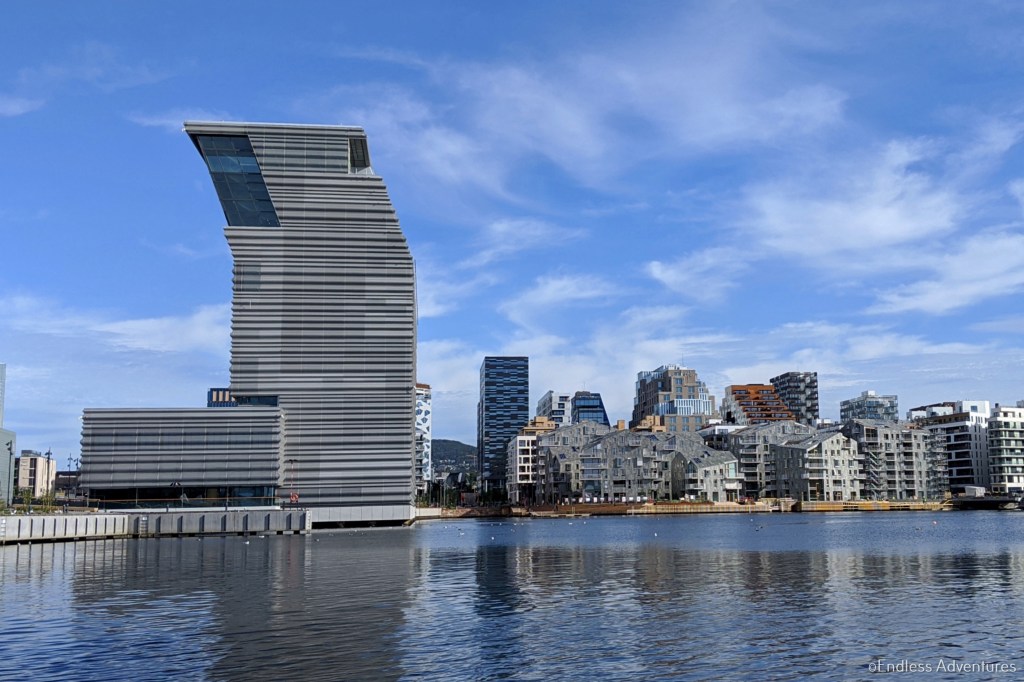
Munch Museum* is a strikingly modern (2020) and somewhat controversial building, due to its unique shape. It’s dedicated to the life and works of the world-famous artist Edvard Munch. The museum features numerous versions of “The Scream” and spans 13 floors, including a restaurant and a rooftop terrace bar. It’s conveniently located just a short walk from Jernbanetorget subway station and behind the Oslo Opera House.
– Insider tip: The main room with Munch’s most famous paintings is on the 4th floor. If you arrive when the museum opens, start your visit at the top and work your way down. This way, you’ll avoid the crowds that typically rush to the main room first. Just 200 meters (0.2 miles) from the museum, you’ll find Opera Beach (Operastranda), a small spot perfect for a swim.

Ekeberg Sculpture Park (Ekeberg parken)
Ekeberg Sculpture Park is a free, outdoor park featuring a diverse collection of contemporary sculptures, all set against stunning views of the city and fjord. Open 24/7, the park showcases over 40 works by renowned artists such as Auguste Rodin, Damien Hirst, Louise Bourgeois, and Fujiko Nakaya. In addition to a café, the park boasts a historic functionalist-style gourmet restaurant, Ekebergrestauranten. Located just a few minutes outside the city center, you can reach the park by tram numbers 11 and 19 and get off at the “Ekebergparken” stop.
– Insider tip: Visiting the park in the fall is particularly magical as the entire landscape transforms into a golden wonderland.

Norwegian Museum of Cultural History (Norsk Folkemuseum)
Norwegian Museum of Cultural History* is an open-air museum featuring over 160 traditional buildings from various regions of Norway, including a 13th-century stave church. It offers a journey through Norwegian history, showcasing how people lived from the 1600s to today in cities, villages, and on farms. In addition to its outdoor buildings, the museum has indoor exhibitions, a shop, a café, and hosts various activities and events during the year. You can reach the museum by bus or ferry from Aker Brygge.
– Insider tip: While you’re in the Bygdøy Peninsula area, also check out the Museum of the Viking Age, the Kon-Tiki Museum, and the Fram Museum, all nearby.
Next-Level Oslo: Recommendations for Your Second Visit
If you’re looking to explore more of Oslo beyond the iconic attractions, here are some great suggestions to uncover a new layer of the city to make your next visit even more memorable.

Aker Brygge
Aker Brygge is a popular waterfront spot that truly comes alive in the summer, with its mix of shopping, dining, art galleries and entertainment. It’s just a short walk from Nationaltheatret subway station and next to The National Museum, Oslo City Hall, various ferry options, and The Nobel Peace Center.

Hovedøya Island
Hovedøya Island is a most popular spot in the Oslo fjord, just an 8-minute ferry ride from the city center. It’s a great destination for hiking, relaxing on the beach, and exploring the ruins of a 12th-century Cistercian monastery. Near the ruins, you’ll find a restaurant, a kiosk, and a café that’s open in summer. The ferry departs next to Aker Brygge and offers a scenic 1-hour loop that visits four islands, making it ideal for island hopping. Tickets* costs the same as a subway ride, valid all day, and provide a budget-friendly option to a fjord cruise. The ferry operates year-round.

The Nobel Peace Center (Nobels Fredssenter)
The Nobel Peace Center* is an interactive museum that showcases the history of Alfred Nobel and the Nobel Peace Prize winners, highlighting their inspiring efforts to make the world a better place. The museum’s main hall features the latest award winner, while past recipients are celebrated through interactive displays throughout the building. Don’t miss the fascinating shop, which focuses on sustainability. The museum is conveniently located near Aker Brygge, right next to The National Museum.

Grünerløkka District
Grünerløkka District often called “Løkka” by locals, is a bohemian and trendy neighborhood bursting with street art, vintage shops, cafes, flea markets, designer boutiques, and restaurants. It’s known for its lively atmosphere and eclectic vibe. A great starting point is Olaf Ryes Plass, a small square at the heart of the area, accessible via tram lines 11, 12, and 18.

Mathallen Oslo
Mathallen Oslo is a bustling food hall featuring a diverse range of gourmet foods, local produce, and international cuisine. Here you can explore various culinary delights at your own pace while enjoying the communal tables throughout the hall. The offerings include Colombian street food, Asian tapas, reindeer, moose, and Korean bibimbap. It’s located about 8 mins on foot from Olaf Ryes Plass at Grünerløkka.

Hike to Vettakollen
Vettakollen is a popular peak on the northern edge of the city and offers a taste of the Norwegian hiking experience. The hike is about 3 km (1.8 miles) roundtrip and provides stunning views of Holmenkollen, the city center, and Oslo fjord. From downtown Oslo, it’s a 20-minute subway ride on line 1 to Vettakollen station. From there, follow Huldreveien road and head toward the “Vettakollen Viewpoint” on your google map. The trails are marked with blue stripes on trees (red stripes are for guiding skiers in winter).

Oslo Botanical Gardens (Botanisk Hage)
Oslo Botanical Gardens is a free peaceful oasis located next to the National History Museum*. It boasts 4,500 diverse plant species, historic greenhouses, and a butterfly house. Highlights include the Herbal Garden with 300 medicinal plants, the Mountain Garden featuring 1,700 species from around the globe, and the Scent Garden, designed for visually impaired visitors and the elderly to evoke memories through fragrance. It’s just a short walk from Tøyen subway station.

Oslo City Hall (Rådhuset)
Oslo City Hall is the administrative heart of Oslo, renowned for its distinctive architecture and murals by celebrated Norwegian artists, including Munch. It’s also the venue for the annual Nobel Peace Prize ceremony. The building features 49 bells that chime every hour from 7 a.m. to midnight, playing everything from classical music to contemporary hits. In the summer, you can enjoy a free 45-minute tour of the City Hall. It’s just a short walk from Nationaltheatret subway station.

Damstredet and Telthusbakken
Damstredet & Telthusbakken are charming cobbled streets lined with well-preserved wooden houses from the 18th and 19th centuries, offering a delightful glimpse into Oslo’s past. The houses are still in use and the area features a large allotment garden and the picturesque “Love Trail” for a pleasant stroll. It’s just a 4-minute walk from the Storgata tram station (lines 11, 12, 17, and 18).

Deichman Bjørvika
Deichman Bjørvika is Oslo’s renovated (2020) main library, located next to Oslo Opera House. This modern building spans six floors and offers more than just books. It’s a hub for activities, art, films, video games, and hobby items (musical instruments, sewing machines, 3D printers, and tools), each floor serving a different purpose. Here you’ll also find a café, restaurant, and most notably The Future Library—a hidden (5th floor) mini library where a famous contemporary writer submits a secret work each year. These works will remain sealed until 2114, when they will be published using paper from a specially planted forest. The library also boasts stunning views of the Oslo fjord.

Oslofjord Floating Saunas
Floating Saunas have become increasingly popular in recent years, blending the Finnish tradition with Oslo’s sparkling waterfront, and you’ll find several sauna spots where you can enjoy a dip in the fjord after. For tourists, KOK is a great option, located across from the Oslo Opera House and Aker Brygge. Another choice is the Oslo Sauna Association, situated near the Munch Museum. You can rent private saunas, share them with others, or even hire a sauna boat for a 2-hour fjord cruise.

Kon-Tiki Museum (Kon-Tiki Museet)
Kon-Tiki Museum* highlights the incredible expeditions of Norwegian explorer Thor Heyerdahl, who famously crossed the Pacific Ocean in 1947 on a balsawood raft named Kon-Tiki, covering 8,000 km (4,900 miles). The museum features the original raft along with artifacts from Heyerdahl’s journeys, including his trips to the Easter and Galapagos Islands. Additionally, the Oscar-winning Kon-Tiki documentary from 1950 is screened daily at 12 noon in the cinema on the lower level. The museum is situated on the Bygdøy Peninsula, where you’ll also find the Museum of the Viking Age, the Fram Museum, and the Norwegian Museum of Cultural History.

Tjuvholmen / Astrup Fearnley Museum
Tjuvholmen is a modern, vibrant, and car-free island, connected to Aker Brygge by a bridge. It’s renowned for its striking contemporary architecture and art galleries, such as Astrup Fearnley Museum of Modern Art*. The museum’s collection is divided between two buildings: one for permanent exhibits and the other for temporary displays. Tjuvholmen also features a small beach, a sculpture park, as well as a variety of restaurants and cafes, and the upscale hotel, The Thief.

Akerselva River (Akerselva)
Akerselva River divides Oslo into west and east, stretching 9.8 km (6 miles) from the northern woods to the Oslo fjord near Munch Museum. The river features an 8 km (4.9 miles) walkway, mostly paved, that winds through various neighborhoods, parks, art installations, and restaurants. Along the route, you’ll encounter over 20 waterfalls, several historic bridges, and buildings. Once heavily polluted, the river is now clean enough for kayaking and swimming. If you’re short on time, a walk from Grünerløkka offers a great taste of the area. In autumn, the city hosts “Elvelangs” (Along the River), where the river’s electric lights are replaced by 4,000 torches, and you can enjoy over 100 cultural events, including live music, art installations, light art, and dance.

Emanuel Vigeland’s Museum
Emanuel Vigeland’s Museum is a hidden gem that even many Oslo locals aren’t familiar with. Located in a quiet neighborhood, this museum and mausoleum features a large barrel vault adorned with an 800 sq. m fresco painting titled Vita (Life), which dramatically depicts scenes from human life, from conception to death. The room is dimly lit, but as your eyes adjust, the scenes gradually reveal themselves on the walls. The museum is open only on Sundays, and it’s highly recommended to book tickets in advance. The nearest subway station is Slemdal, just an 8-minute walk away. Emmanuel Vigeland, the museum’s namesake, is the younger brother of Gustav Vigeland, the famous sculptor behind the Vigeland Park.

Rose Castle (Roseslottet)
Rose Castle* is a unique outdoor art installation featuring 300 pieces, including paintings and sculptures, all centered around themes of democracy, human rights, and the rule of law. The installation was initiated and developed by two artist brothers, Eimund and Vebjørn Sand, originally intended as a temporary project lasting just one year, but has been extended through 2025. You’ll also find a shop and café on site, and the venue is conveniently located right next to Frognerseteren subway station on line 1. The Rose Castle has been recognized by Time as one of “The World’s 100 Greatest Places.”

Sørenga Seawater Pool (Sørenga sjøbad)
Sørenga Seawater Pool is a large ocean pool located at the tip of Sørenga waterfront, just a short walk across a bridge from Munch Museum. The facility features a beach, a children’s pool, and a diving tower. In winter, it’s a popular spot for ice bathing. The bridge leading from the museum offers excellent photo opportunities of the city’s harbor.

Kampen neighborhood (Kampen trehusbebyggelse)
Kampen is a quaint neighborhood on a small hill, knownfor its charming, colorful wooden houses. It is said to have inspired Norway’s beloved children’s author, Torbjørn Eger, in his famous book Folk og Røvere i Kardemommeby (When the Robbers Came to Cardamom Town). The neighborhood features a small square with a church, a flower shop, a café, a bar, and a few nearby restaurants. You can easily reach Kampen by taking bus number 60 or by walking 8 minutes from the Tøyen subway stop.

Henie Onstad Art Center (Henie Onstad Kunstsenter)
Henie Onstad Art Center* is a modern museum located 15 mins west of Oslo, beautifully set by the fjord. It has rotating exhibitions but also has a permanent collection featuring works by Yayoi Kusama. The museum is surrounded by a sculpture park with 30 pieces and offers a highly regarded restaurant, café, and shop. You can easily reach the museum by taking bus 160.

Mini Bottle Gallery (Småflaskemuseet)
Mini Bottle Gallery is a weird but fascinating museum, home to the world’s largest collection of mini bottles, amassed by one of Norway’s most eccentric and wealthy individuals. The museum features 53,000 bottles, with 12,500 on display across 50 meticulously designed installations spread over three floors. On the first floor, you’ll find a quirky bar where even the bathrooms are worth a visit.

Kistefos Museum (Kistefos Museum)
Kistefos Museum is a renowned cultural park that opened in 1999, showcasing over 50 sculptures by both Norwegian and international artists. The park is celebrated for its ever-growing collection of contemporary artworks and was named “Tripadvisor’s Traveller’s Choice” in 2020. A highlight is The Twist, an iconic bridge and museum that features temporary exhibitions. Located about an hour outside Oslo, Kistefos is accessible via express bus from Oslo’s bus terminal (VY66 Oslo-Jevnaker), with the journey taking approximately 1 hour and 30 minutes each way. The express bus run from mid-May through mid-October.
Oslo offers an endless array of sights and experiences, from iconic landmarks to hidden gems. It’s impossible to cover everything in a single visit, or even in a single blog post. However, I hope this guide has provided you with some inspiration and new ideas for your next trip to “The Tiger City”.
 EA Heidenreich