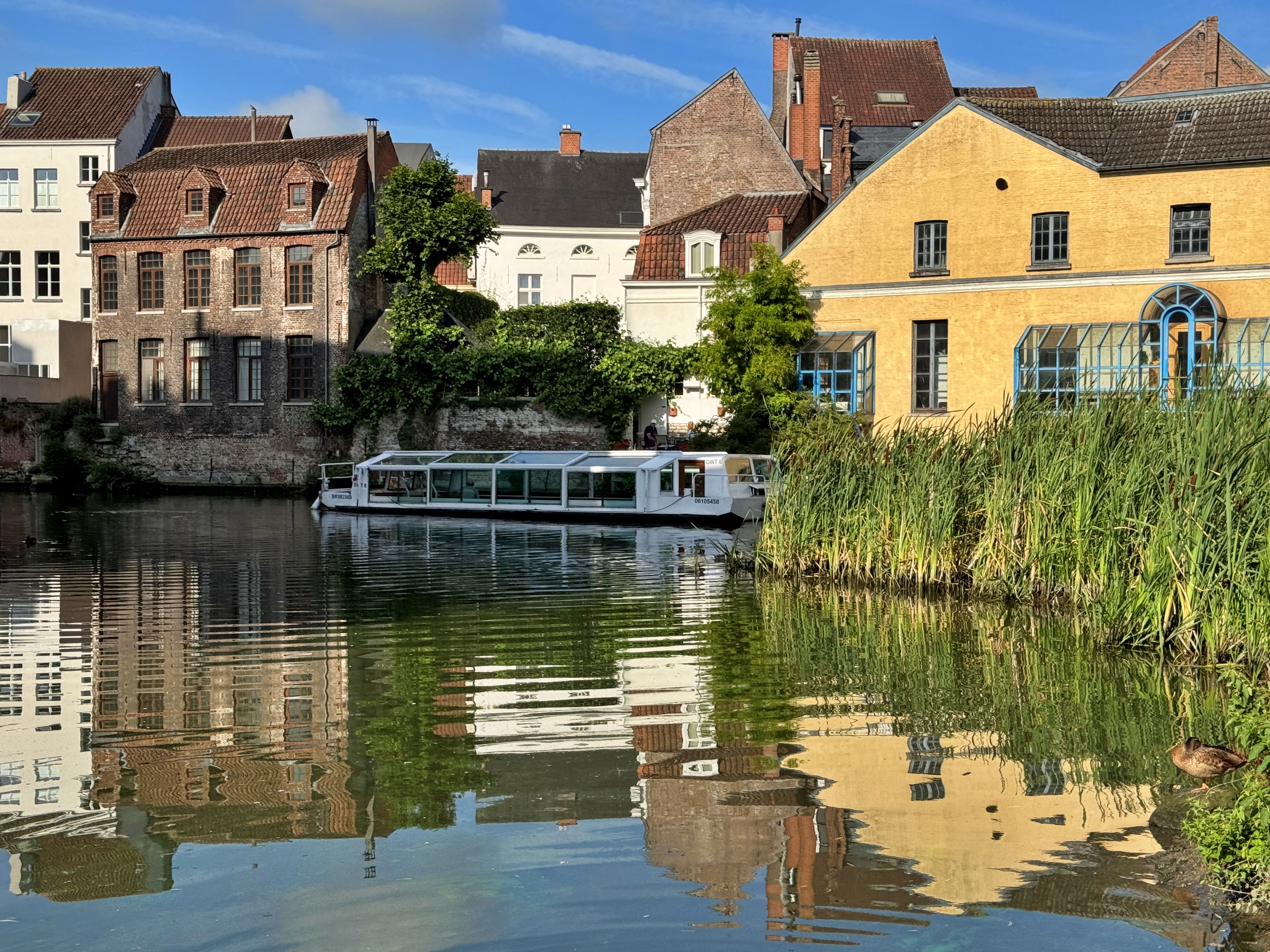
Ghent is a cultural gem with a compact historic city center filled with medieval architecture, lively squares, and picturesque canals. Most attractions are close together, making it easy to explore without covering long distances or navigating difficult terrain.
This guide is designed to make visiting Ghent easier and more enjoyable for everyone. Whether you use a wheelchair, walk with crutches, travel with young children in strollers, or simply want to reduce physical strain, you’ll find practical tips and accessibility insights throughout to help you experience the city with confidence.
I spent two days exploring Ghent and discovered a mix of sights and experiences that suit different abilities without limiting access to the city’s rich history and main attractions.
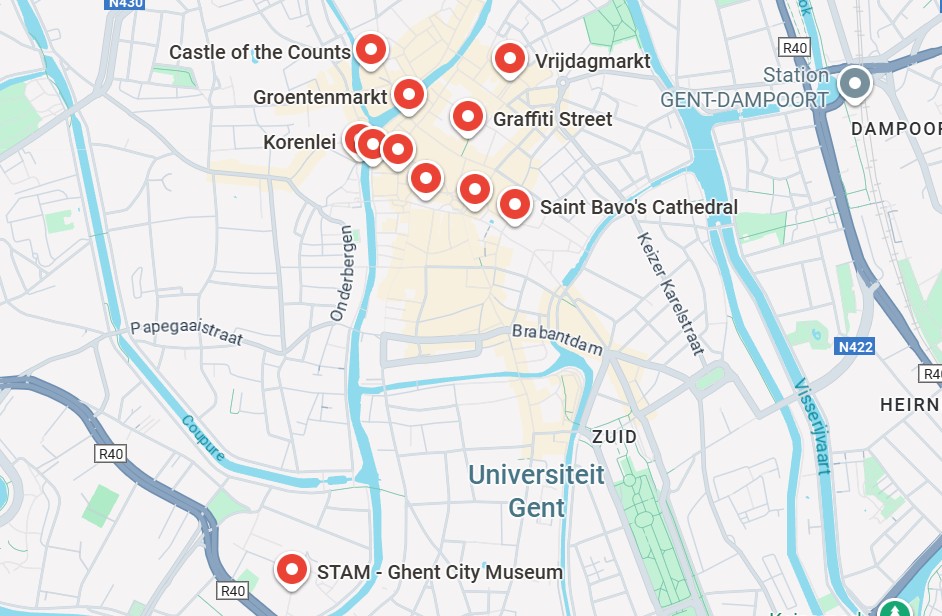
Discover Ghent’s Sights on Google Map
HOT TIP: CITYCARD GHENT
The CityCard Ghent gives you one-time access to many of the city’s top attractions, monuments, and museums. It also includes a guided boat tour, unlimited tram and bus travel with De Lijn, one day of bike rental (deposit not included), and a full day on the hop-on hop-off water tram. I’ve marked the sights where the CityCard is relevant with an asterisk (*).
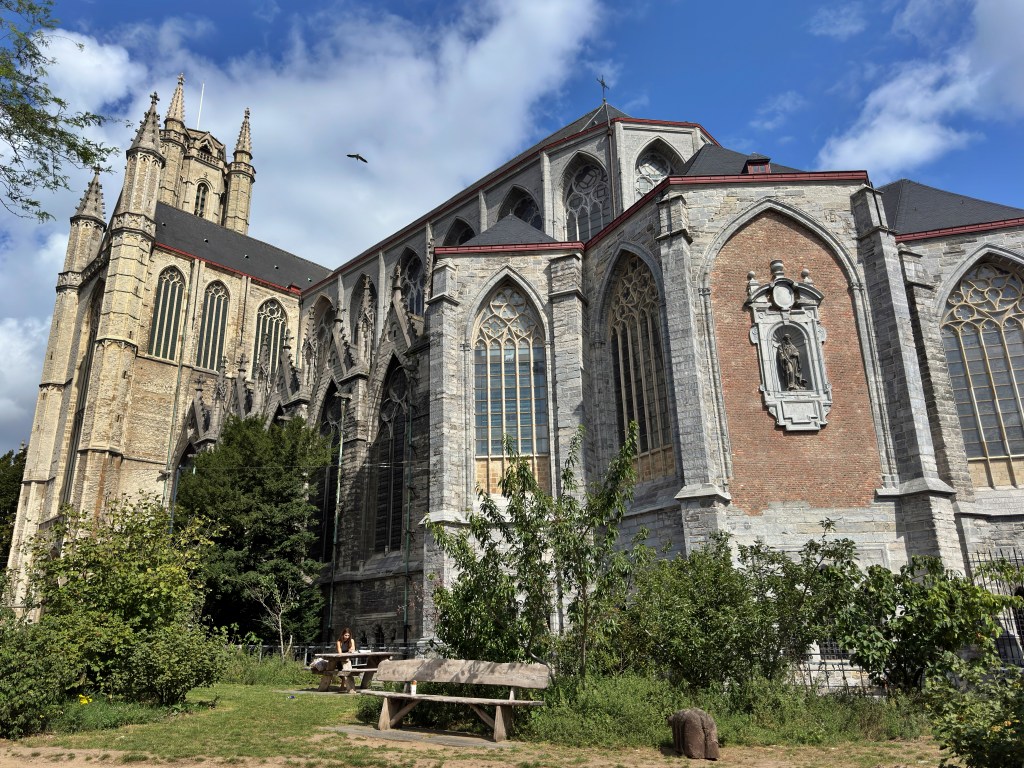
St Bavo’s Cathedral (Sint-Baafs Cathedral)
St Bavo’s Cathedral* is one of Ghent’s most iconic landmarks, a Gothic masterpiece that has stood for centuries. Inside, you’ll find the world-famous Ghent Altarpiece, The Adoration of the Mystic Lamb by the Van Eyck brothers. This 15th-century polyptych is considered one of the most influential artworks ever created and has been housed here for over 600 years.
Entry to the cathedral is free, but viewing the altarpiece requires a timed ticket. You can book basic access or choose the additional Augmented Reality tour in the crypt, which lasts around 45 minutes. The see-through AR glasses allow you to explore the dramatic history of the cathedral and the painting while staying aware of your surroundings. The tour takes place in a small, accessible area with elevators to all floors. Note that the only accessible restrooms are located beyond the ticketed gates.
The cathedral itself has smooth marble floors, a low-gradient ramp at the entrance, and wide, easy-to-navigate aisles. I recommend setting aside two hours to enjoy both the full altarpiece experience and the cathedral’s stunning interior.
– Insider tip: Arrive early. The cathedral opens at 8:30 a.m., while access to the altarpiece begins at 10, and the early morning calm makes the visit even more special. If you book the first slot, take the elevator to the second floor to watch the panels open at 10:15, then continue to the crypt for the AR tour. The CityCard includes a €10 discount when booked online.
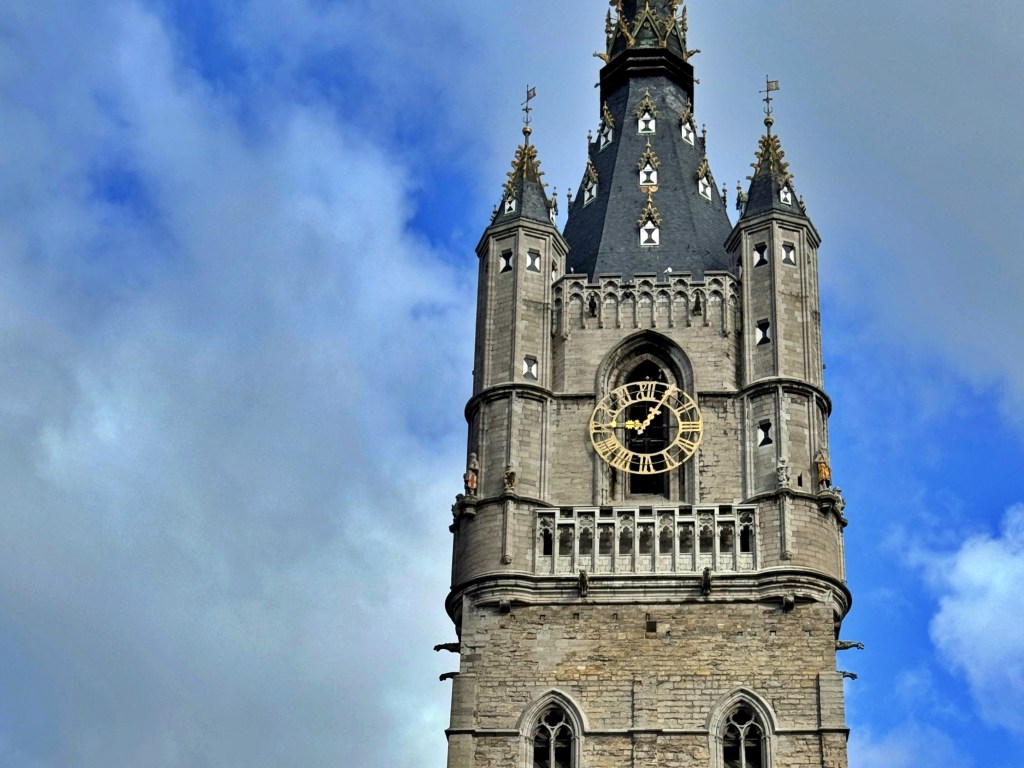
The Belfry (Het Belfort van Gent)
The Belfry* of Ghent stands 91 meters tall and is a UNESCO World Heritage Site, long seen as a symbol of the city’s independence. A golden dragon perches proudly on top, and inside, exhibits highlight Ghent’s medieval trade history, including the original dragon weather vane. The real reward is the panoramic view from the top, where rooftops, canals, and towers stretch out in every direction.
Accessibility is partial. The elevator to the upper levels starts on the second floor, so visitors must first climb around 50 steps. From there, the rest of the ascent is avoided, making it manageable for many who can handle a short staircase. If the stairs are not an option, it’s still worth visiting the square below, where the Belfry’s Gothic presence and surrounding architecture are striking.
Saint Nicholas’ Church (Sint-Niklaaskerk)
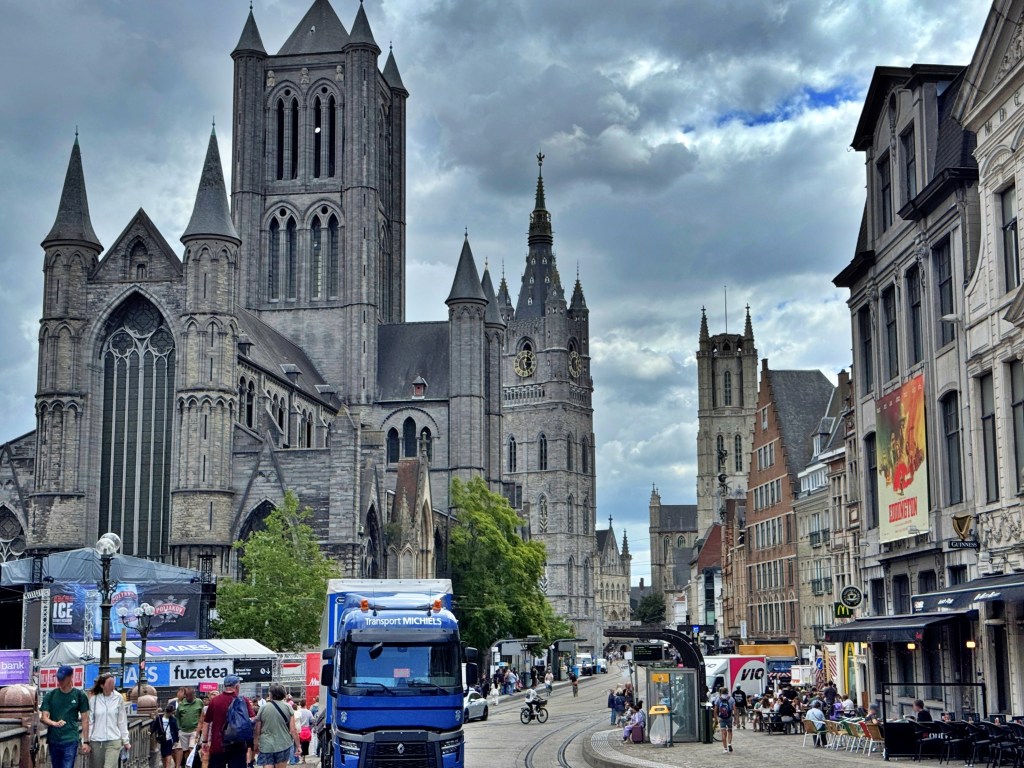
Saint Nicholas’ Church* is one of the oldest buildings in Ghent, dating back to the 12th century. Once the church of merchants and traders, it stands as a reminder of the city’s prosperous past. Its dark stone exterior and soaring Gothic lines make a striking impression, while the interior feels calm and open. A unique feature of the church is its central tower, which acts as a natural lantern where daylight streams into the transept, casting a soft, atmospheric glow.
The church is generally easy to access, with level entrances and spacious aisles, though seating areas can be a bit narrow. Visitors are asked to respect the daily services, when tourism should pause to maintain the quiet.
The Korenmarkt and Groentenmarkt squares
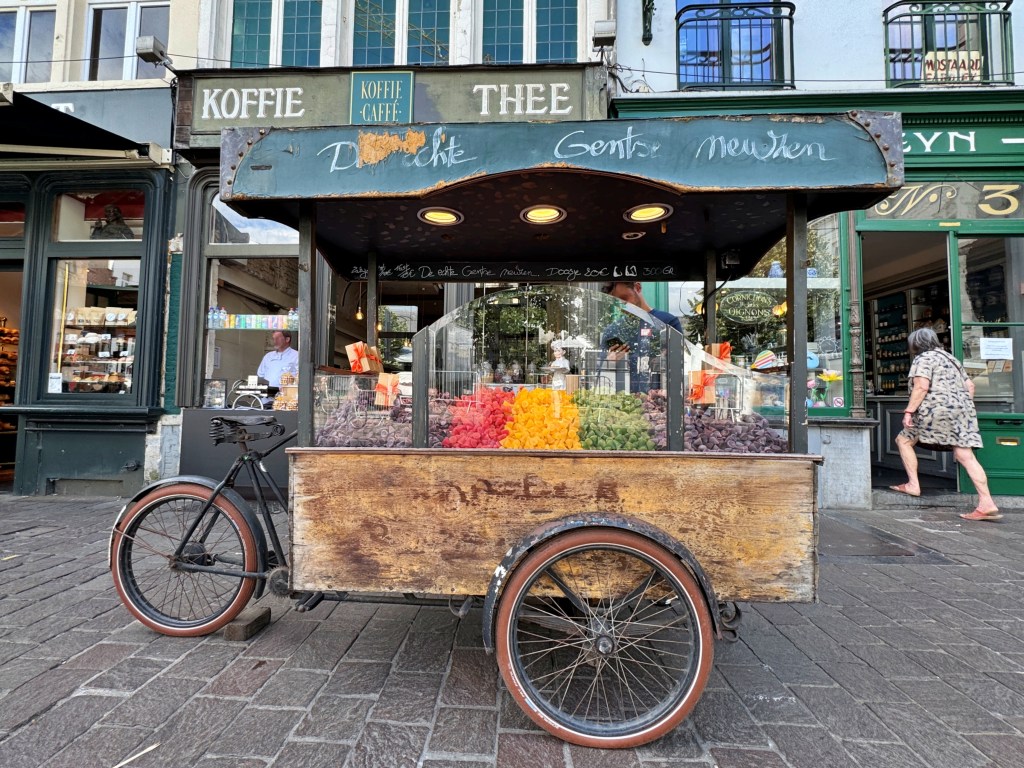
These lively squares are the heart of Ghent’s old town, filled with beautifully preserved façades and a constant flow of locals and visitors. At Korenmarkt , café terraces line the square, perfect for a pause as trams glide past historic buildings. Just around the corner, Groentenmarkt offers local delicacies, artisanal cheeses, and the rich aroma of chocolate shops drifting out onto the cobblestones.
Both squares are mostly flat with wide, open spaces, though some cobblestone areas can feel uneven for wheelchairs or strollers.
– Insider tip: Don’t leave without trying a cuberdon, a purple, raspberry-flavored candy nicknamed “little noses,” a sweet specialty unique to Ghent.
Korenlei and Graslei
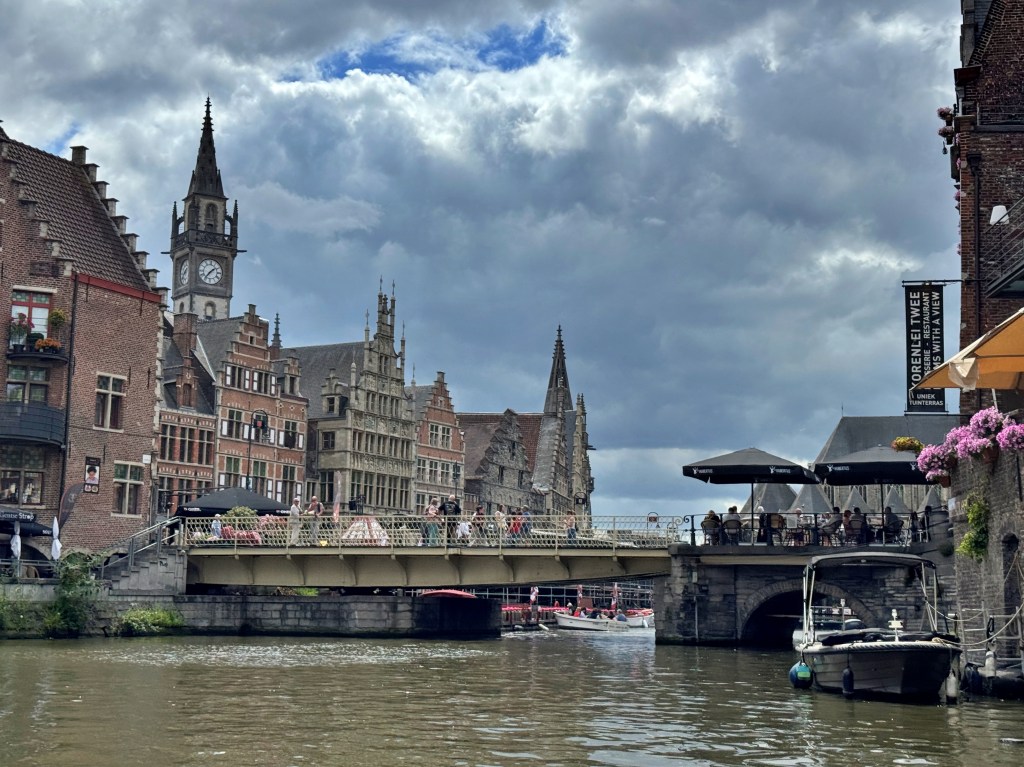
Korenlei & Graslei* are two historic quays along the River Lys and among the most photogenic spots in Ghent. Once the heart of the city’s grain trade, they’re now popular for scenic walks, waterfront dining, and boat tours. Elegant guild houses line the river, their ornate façades reflected in the water, while bridges and castle turrets rise in the distance, creating a postcard-perfect view.
Nearby St Michael’s Bridge is one of the best places to take it all in, with sweeping views of Ghent’s three iconic towers: St. Nicholas’, the Belfry, and St. Bavo’s. The bridge can be reached via natural inclines on the Graslei side; otherwise, access involves steep stairs. Once at the top, the surface near the railings is mostly flat and easy to navigate.
Canal tours depart from both quays, but the most accessible option is on the Graslei side. While none of the boats are fully wheelchair accessible, staff are happy to assist with the few steps down to the pier and onto the boat.
Castle of the Counts (Gravensteen)
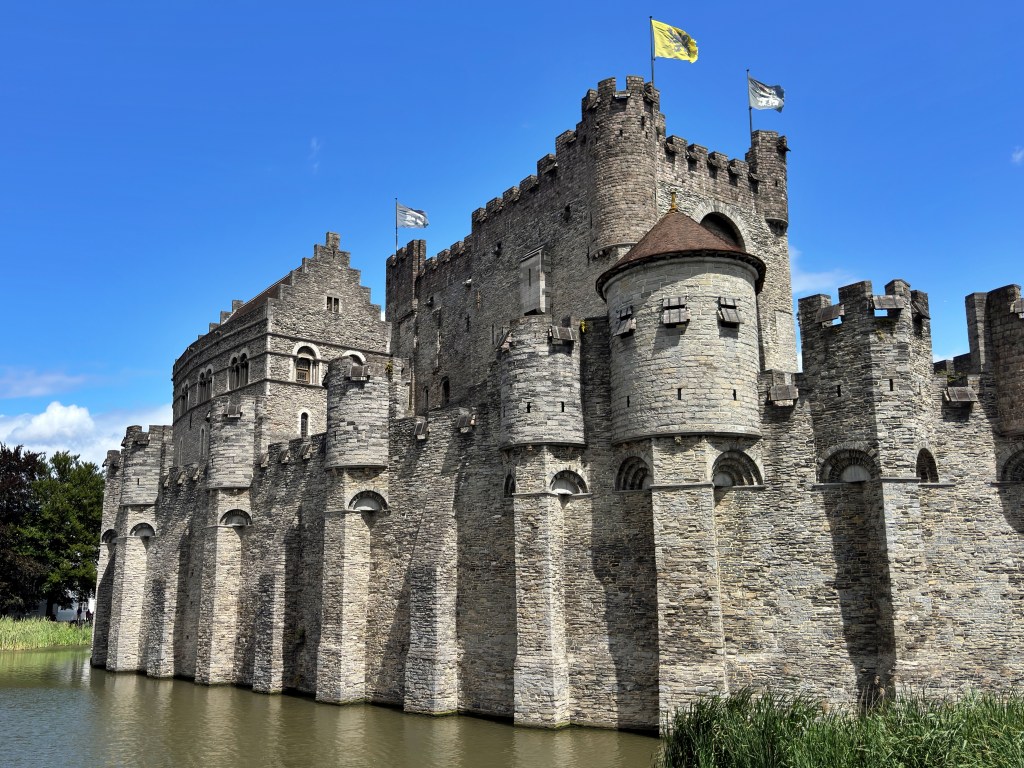
Castle of the Counts* is a striking medieval fortress in the heart of Ghent, its thick stone walls rising dramatically above the surrounding streets. Inside, you’ll find exhibitions of armor, weapons, and glimpses into the city’s darker history, brought to life through morbid artwork and an included audio guide that adds context to each room.
Accessibility is very limited, as the castle can only be explored by climbing many steep staircases. Those who can manage stairs will follow one-way routes that include narrow spiral steps up to the rooftop (4 floors), where sweeping 360-degree views of Ghent make the climb worthwhile. Sturdy handrails on one side help with balance. For visitors avoiding spiral stairs, staff can offer an alternate route to the second-floor weaponry room only via a wider staircase with no turns until the final few steps.
– Inside tip: Even if you’re not going inside, the castle is well worth a visit for its dramatic exterior and the excellent views from nearby streets and bridge. Accessible restrooms are available across the street near the Visitor Center. And here’s a charming local detail: lights near the castle flash each time a baby is born in one of the city’s maternity wards.
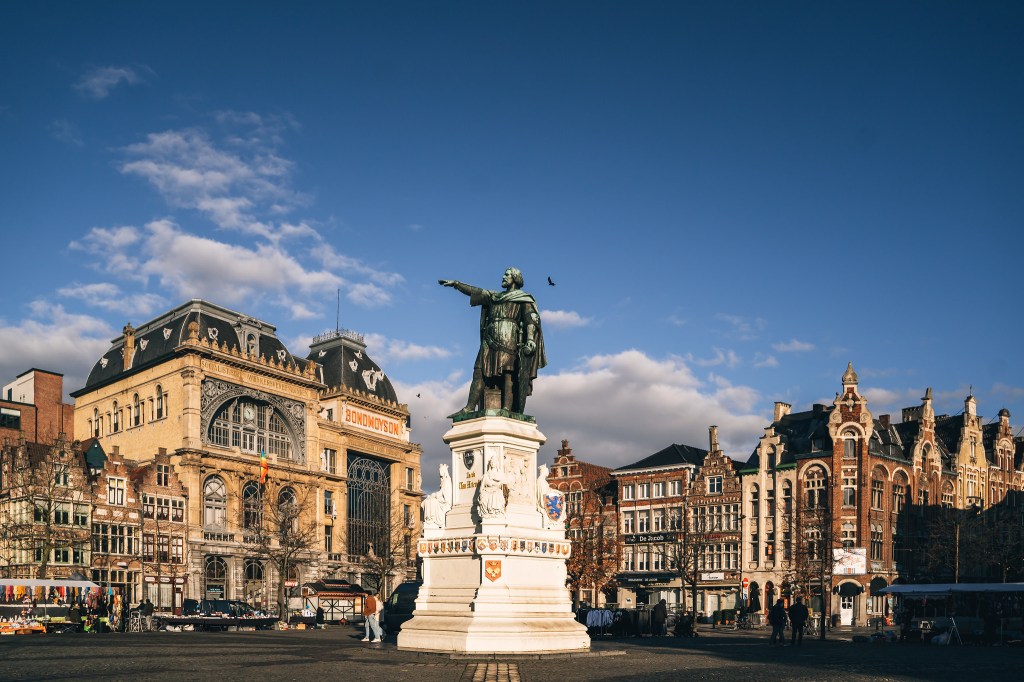
Vrijdagmarkt
Vrijdagmarkt is one of Ghent’s oldest squares and has been a gathering place for centuries, hosting everything from lively celebrations to grim public executions. Today, it’s much more cheerful, surrounded by historic façades and bustling cafés that make it a perfect spot to pause for a drink or a quick meal.
The square is mostly level, with a mix of flat cobblestones and paving stones. It’s generally easy to navigate with a wheelchair or stroller, though some areas may feel slightly uneven. (image credit Visit Gent)
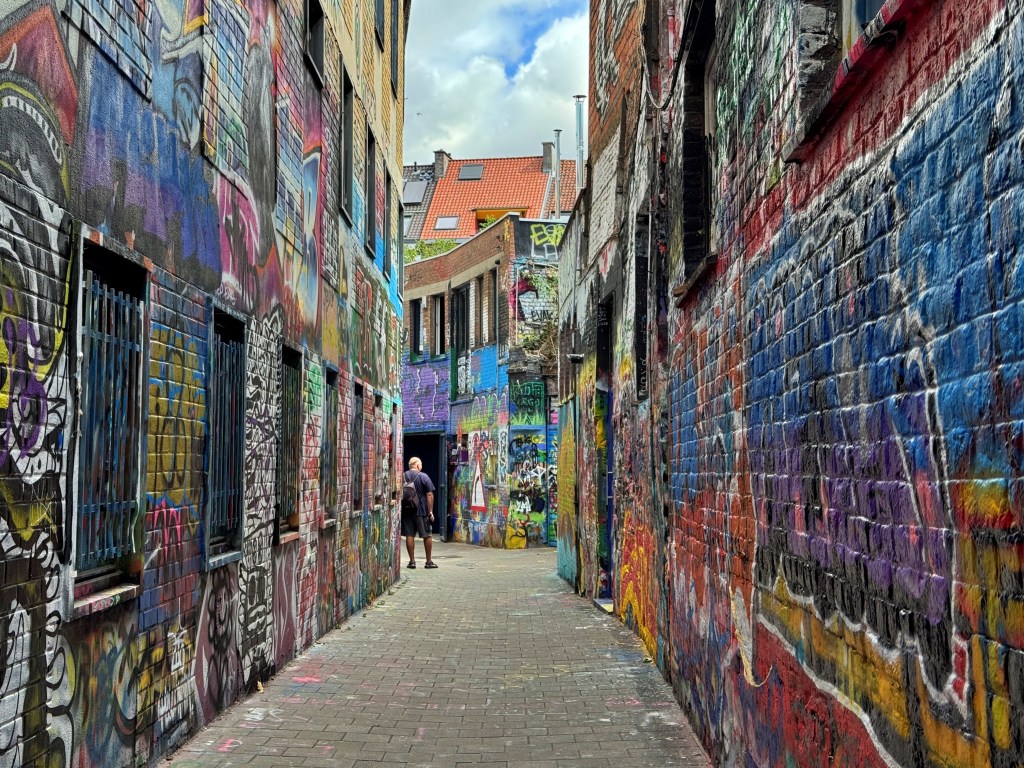
Graffiti Alley (Werrengarenstraat)
Graffiti Alley is Ghent’s ever-changing canvas, a 120 metres long narrow passage filled with bold color and creativity. First launched as a temporary project in 1995, it became a permanent fixture and now showcases an evolving mix of street art. Murals and tags cover the walls and change often, so no two visits are ever quite the same.
The alley is flat, paved, and easy to navigate.
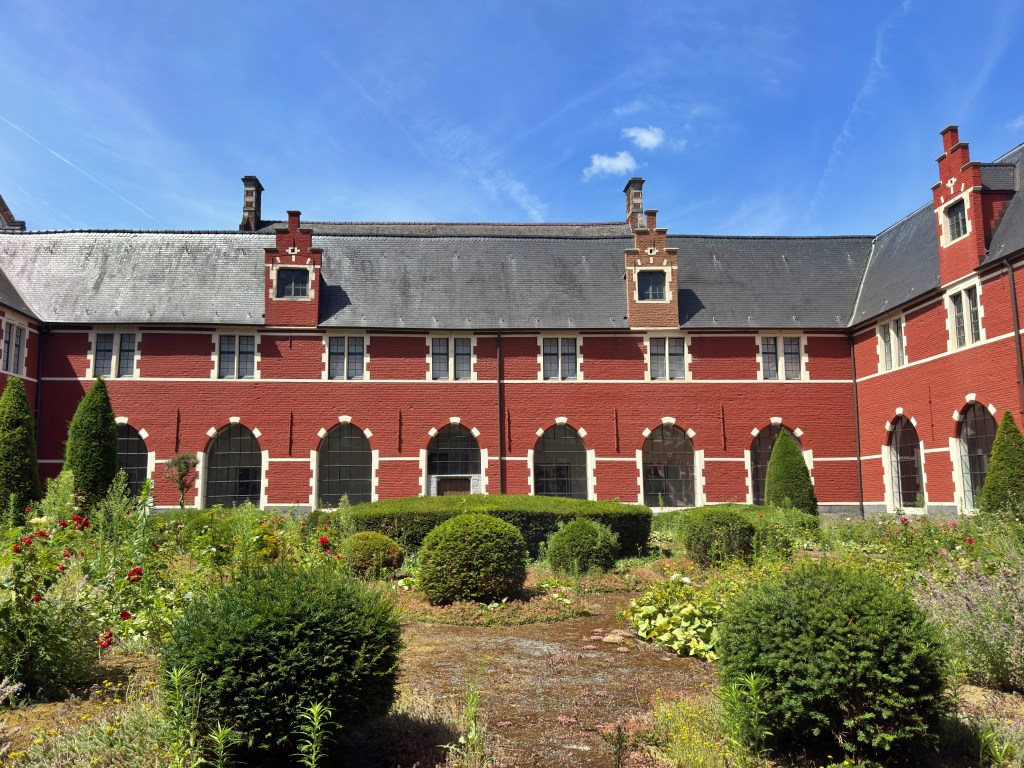
STAM – Ghent City Museum(Stadsmuseum Gent)
STAM – Ghent City Museum* offers an engaging mix of interactive exhibits and striking architecture, laid out along a one-kilometre loop that lets you dip in and out of the rooms that interest you most. It is an excellent introduction to the city’s story, tracing Ghent from its medieval beginnings to the dynamic urban centre it is today. Highlights include a massive aerial photo of Ghent you can walk across, multimedia displays, and artefacts that bring centuries of history to life without overwhelming you with information.
The museum is highly accessible, with step-free entry, elevators, and accessible restrooms. Several disability parking bays are located near the stairs leading to the entrance, and a ramp next to the bicycle rack provides an easy alternative for wheelchairs and strollers. Wheelchairs are also available to borrow at the entrance.
– Insider tip: Plan for at least an hour to an hour and a half to enjoy the experience at your own pace. Before leaving, make time for the bright and welcoming STAM Café, which serves fresh, tasty food in a peaceful garden setting.
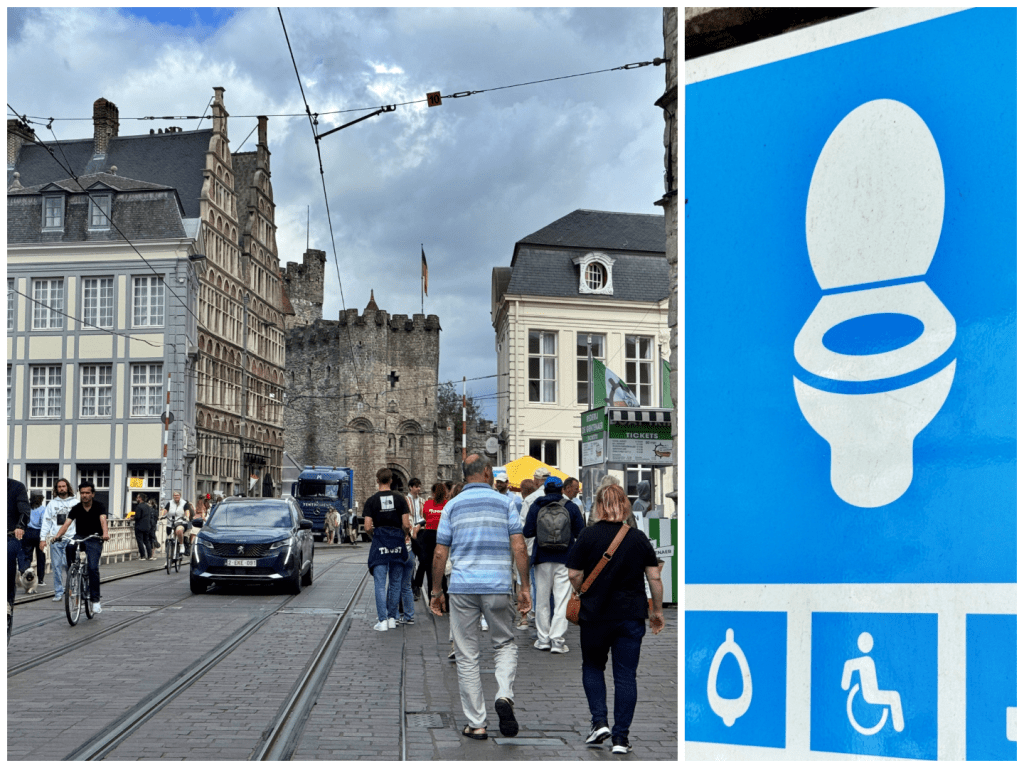
Good to know!
– The city truly shines after sunset. Streets and canals are beautifully illuminated, creating a magical evening atmosphere that is perfect for a relaxed stroll or a scenic boat ride. For planning, you can use the Magical Ghent Evening digital map to guide your route.
– In Ghent’s historic city center, cars are restricted, and trams share the space with cyclists and pedestrians, often without separate sidewalks. Some streets can feel narrow, so it is worth staying alert when trams pass through. If you plan to use public transport, look for trams with a wheelchair symbol on the front. These are equipped with ramps, and drivers are trained to assist passengers using non-electric wheelchairs. Boarding is usually straightforward with a companion, but drivers will help if needed. Accessible doors are clearly marked.
– Public toilets are easy to spot throughout the city thanks to large blue signs. If a facility is accessible, it will display the wheelchair symbol.
Additional accessible info:
For more detailed accessibility information, stop by the Ghent Visitor Center, located just across the street from the Castle of the Counts. They provide printed guides to accessible sights, restaurants, hotels, and attractions. They have also produced a walking tour with tactile images and audio descriptions designed for visitors with visual or hearing impairments. Additional resources are available online at Ghent Accessible City.
If you are arriving by car, note that Ghent’s city center is a low-emission zone with strict driving and parking restrictions. I stayed at Hotel den Briel, located just outside the zone, which made things much easier. The hotel has on-site parking, fully accessible rooms, and is only a few metres from Tram Stop 4, offering a direct connection to the city center in about ten minutes. It is a modern hotel situated near the city hospital, designed with accessibility in mind throughout.
Ghent is full of character, from iconic landmarks to hidden corners, and it is impossible to see it all in a single visit. Still, I hope this guide has given you useful tips, a bit of inspiration, and a few new ideas for planning your own trip to the “Historic Heart of Flanders“.
 EA Heidenreich